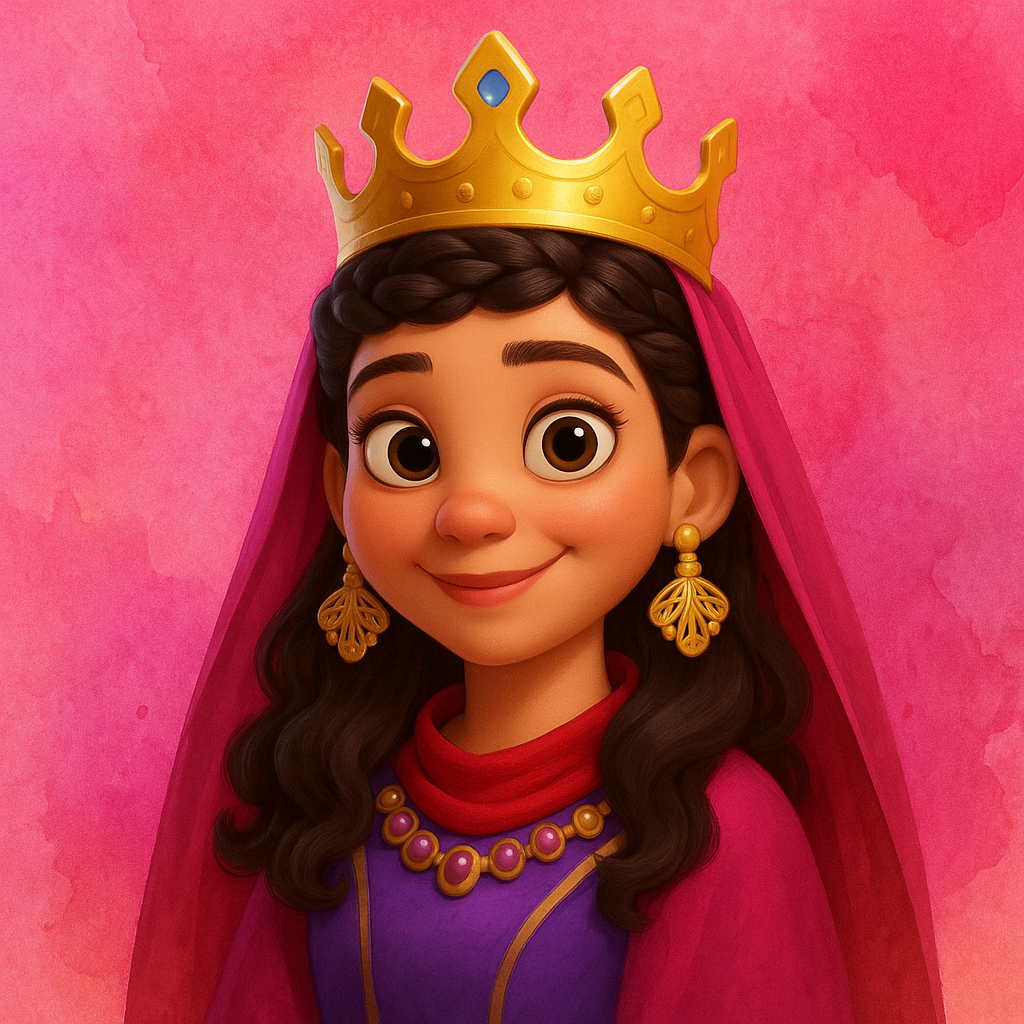
The journey to the palace felt like a slow march into exile. We were herded into ornate carriages, our lives no longer our own, and though the air was heavy with the chatter of the other young women, I stayed silent. My hands gripped the folds of my cloak tightly as I stared at the dusty path ahead. Some of the women whispered in excitement about the grandeur that awaited us, others cried softly, mourning the homes they had left behind. I could only feel the quiet ache of dread.
When we arrived at the gates of the palace, my breath caught in my throat. The sheer size of the walls, the intricate carvings of vines and flowers, and the glint of gold that adorned the doors—all of it spoke of a world far removed from the modest streets of Susa. Even the servants’ attire gleamed of gold. They rushed about, their sandals slapping against polished stone floors, while guards stood tall, their spears gleaming in the sunlight.
I had seen the palace from a distance all my life, but standing here, about to step inside, was something else entirely. I felt small — insignificant — like a single grain of sand on the shores of an endless sea. My feet hesitated at the threshold, but the firm nudge of a guard urged me forward.
The King’s Harem
Inside, the air was thick with the scent of incense and the faint, lingering aroma of exotic oils. The halls were wide and filled with tapestries depicting battles, feasts, and conquests. My eyes roamed over the luxuries, but they felt oppressive, not welcoming. How could a place so rich feel so hollow?
We were taken to a wing of the palace overseen by a man named Hegai, the eunuch in charge of the king’s harem. His piercing eyes scanned the group of us as we filed in, his presence commanding and his tone brisk.
“You are here to prepare for the king. Each of you will follow my instructions to the letter. Your success depends on your ability to listen and obey. For the next twelve months, your lives will consist of beauty treatments, lessons in etiquette, and practice in every art the king might desire.” His voice carried no warmth, only authority.
I wanted to fade into the background, to become invisible. But as Hegai’s eyes swept over the group, they lingered on me for a moment longer than I was comfortable with. I quickly dropped my gaze, unsure of what he had seen.
We were assigned quarters—small but richly furnished rooms that were meant to impress. My bed was draped in silk, the rugs beneath my feet were plush, and the walls were painted in colors that reminded me of sunsets. But all of it felt like a cage. A golden cage.
The other women whispered among themselves as we settled in. Some marveled at the wealth around them, while others spoke of their strategies to win the king’s favor. I stayed quiet, feeling out of place and longing for the simple comfort of home. The chatter faded as Hegai’s assistants began to explain the routine: oil treatments, aromatic baths, hair stylists, and lessons in walking, speaking, and serving.
The Preparations Begin
The preparations began immediately. For twelve months, we were to be groomed, polished, and transformed into what the king might find pleasing. Six months with oil of myrrh and six months with balsam oil, and various ointments for beauty treatment.
Oils and perfumes filled the air, their fragrances clinging to my skin. My hair was combed until my scalp burned; my nails were painted in colors I had never seen. They told me I was beautiful, but their words felt hollow. What use was beauty if it meant losing myself?
That night, lying on the unfamiliar bed, I couldn’t sleep. My thoughts drifted to my parents, whom I barely remembered, to Mordecai, to the streets of Susa, to the little home I might never see again. I wanted to cry, but the tears wouldn’t come. Instead, I prayed—whispered words to the God of Abraham, Isaac, and Jacob.
“What is Your plan for me?” I would ask. The silence that followed was both comforting and maddening. I didn’t know what He intended, but I clung to the belief that He had not abandoned me.
The days turned into weeks, and I began to learn the rhythms of palace life. Hegai, though stern, began to show an unexpected kindness toward me. He would offer advice, ensuring I was given seven attendants as well as the best oils and cosmetics, and he assigned me and my attendants to one of the more comfortable quarters. I didn’t understand why he favored me, but I accepted his help gratefully.
The other women began to notice, too. Some whispered behind my back, their voices tinged with envy. Others tried to befriend me, hoping to glean whatever secrets they thought I held. But I had no strategy, no grand plan. All I could do was be myself.
A Glimpse of the King
One evening, as I walked through the courtyard with a few other women, I caught my first glimpse of King Xerxes. He was seated on a grand dais, surrounded by attendants. His robes shimmered with gold and jewels, and his expression was one of power and pride—appropriate for the man who ruled over 127 provinces from Inʹdi·a to E·thi·oʹpi·a.
My heart thudded in my chest, a mixture of awe and fear. I quickly averted my eyes, not wanting to draw attention to myself.
The murmurs of the women around me filled my ears.
“I can’t believe it,” one girl whispered, clutching the arm of her friend. “The king—in front of us!”
“He looks magnificent,” one said. Another whispered, “I hear he can be ruthless.”
“Did you see his crown?” another girl added, eyes wide with excitement. “It’s nothing like the ones the nobles wear. That is the crown of the empire.”
But not all the voices carried admiration.
“I thought he would be older,” muttered a girl with striking dark hair. “But he’s… not much different from what they say.”
“And what do they say?” another asked, her voice edged with curiosity.
The first girl hesitated, then lowered her voice.
“That he is powerful, but not always wise. That he is quick to anger, yet easily swayed. That he has ruled with grandeur but has not known peace.”
A hush fell over them. They all knew why they were here.
The king was searching for a new queen.
And there was only one reason why.
The Fall of Vashti
“I still don’t understand,” one of the younger girls whispered. “Why does he need a new queen? What happened to Vashti?”
The group exchanged glances.
“She defied him,” a red-haired girl said, as if reciting something she had heard before. “At the great banquet. The one that lasted—what, six months?”
“One hundred and eighty days,” another girl corrected, nodding. “A display of his power. His wealth, his army, his palace—all of it for the world to see.”
“I heard even the goblets were made of gold,” one of the bolder girls added. “And no one was forced to drink. They could have as much or as little wine as they pleased.”
“It was a feast for men,” another girl said pointedly. “But Queen Vashti hosted her own banquet for the women.”
For a moment, there was silence as they considered the fallen queen.
“She was beautiful,” the dark-haired girl murmured, “but proud.”
“Or perhaps… she was simply tired of being paraded like a trophy,” another whispered.
Heads turned at the remark. The tension between them was thick now, but no one disagreed.
A Dangerous Refusal
“They say,” the red-haired girl continued carefully, “that on the seventh day, when the king had drunk too much wine, he commanded his personal assistants, the court officials—Me·huʹman, Bizʹtha, Har·boʹna, Bigʹtha, A·bagʹtha, Zeʹthar, and Carʹkas—to get Vashti to appear before the nobles… wearing her crown.”
“Just her crown?” one of the bolder girls scoffed. “What kind of request is that?”
“The kind a king can make without being questioned,” another muttered.
“But she questioned it,” the first girl said. “She refused.”
Some of the girls gasped. Even if they had heard it before, it still shocked them. No one refused the king.
“And what happened then?” the youngest of them asked, wide-eyed.
The dark-haired girl spoke solemnly.
“He was humiliated. The most powerful man in the world, defied before his court.”
The group shuddered.
“And his advisors, those closest to him, 7 princes—Car·sheʹna, Sheʹthar, Ad·maʹtha, Tarʹshish, Meʹres, Mar·seʹna, and Me·muʹcan—they feared that if a queen could refuse her husband, all the women in the empire would follow.”
“So they banished her,” another girl added.
“No,” the dark-haired girl corrected, lowering her voice. “They did worse than that. They erased her.”
The Decree to the Kingdom
The fallout from Queen Vashti’s defiance did not remain within the palace walls—it rippled through the empire like a storm. At the urging of his advisors, King Xerxes issued a royal decree that was swiftly carried to every province of Persia, written in every language so that all might understand its weight:
“Every man shall be ruler over his own household, and the authority of husbands shall not be questioned.”
It was a proclamation meant to restore order, to ensure that no woman—from the highest noble to the lowest servant—would dare defy her husband as Vashti had defied the king. The messengers rode out, spreading the king’s command to the farthest reaches of the empire, making it clear: what had happened in the royal court would not be repeated in the homes of Persia.
But for all its authority, the decree did not erase the lingering whispers. Instead of fear, it planted something else in the minds of the people—curiosity. Why had the queen refused? What had truly happened in that banquet hall? And perhaps most dangerous of all… what kind of woman would take her place?
What Will Happen to Us?
The realization hung between them.
Vashti, the woman who had once been queen, was gone.
“Do you think she regrets it?” one of the girls asked. “Not coming when he called?”
No one answered.
After a long silence, one of them finally said, “Does it even matter? She is nothing now.”
The weight of those words settled over them like a shadow.
For one of them would soon take Vashti’s place.
And if a queen could be removed so easily… what would stop it from happening again?
None of them said it aloud, but they all thought the same thing:
What would become of the next queen?
The doors to the king’s hall shut again, sealing them out.
And though the sight of the king had once filled them with excitement, now, it filled them with fear.
Their words only deepened my anxiety. This was the man who held my fate in his hands, the man who could change my life forever with a single word.
That night, I sat by the window in my room, staring out at the stars. The cool breeze brushed against my face, and for the first time in weeks, I felt a flicker of peace. Mordecai’s regular visits to enquire about me, and a glimpse of him in the distant courtyard comforted me. His words echoed in my mind: “The Lord’s plan is greater than we can understand.”
I whispered into the night, “If this is where You need me, Lord, I will trust You.”The stars seemed to shine brighter in response, and though my circumstances hadn’t changed, my heart felt lighter. Whatever lay ahead, I would face it with faith and courage.