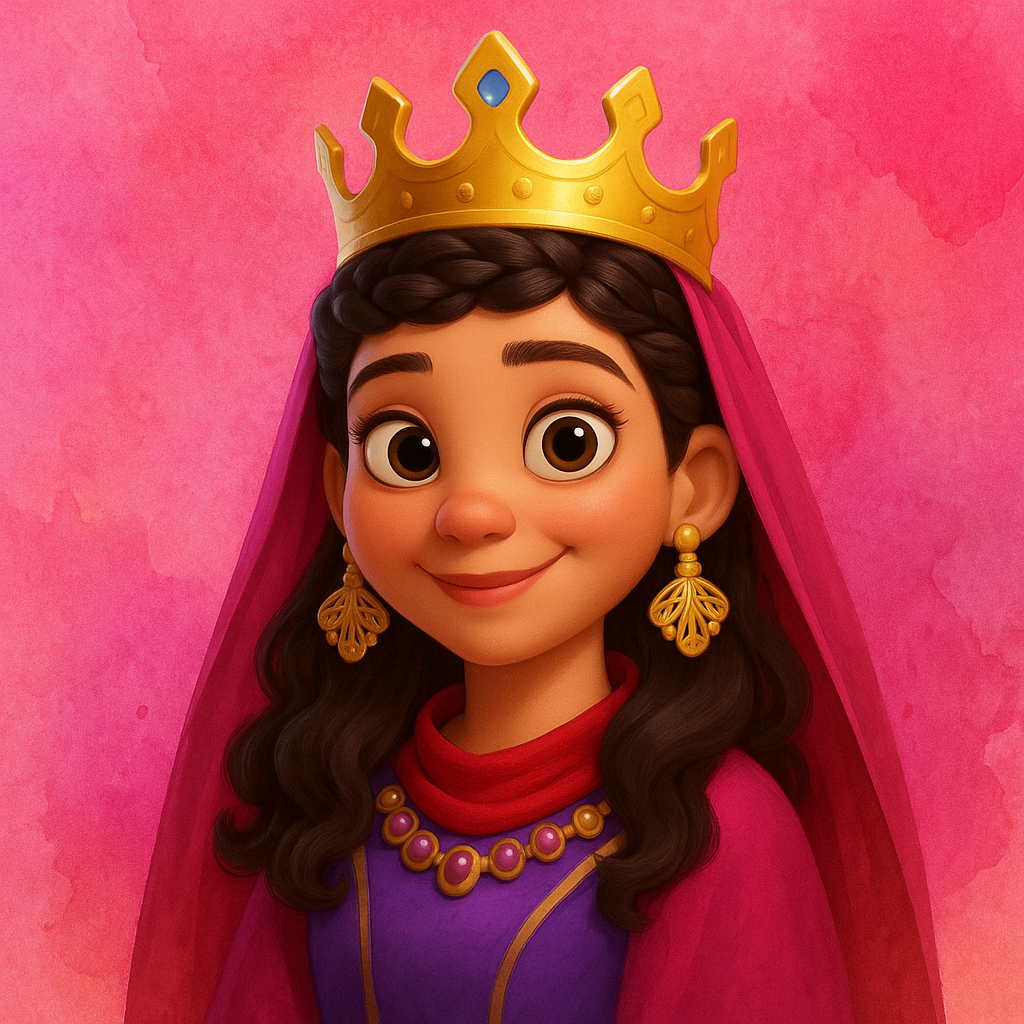
The Queen Who Saved a People
There are days I walk past the palace, long after the noise has faded and the memory of war has softened into stories.
Children play in the street wearing paper crowns.
Vendors shout, “Purim pastries!”
And the sound of laughter echoes through a city that once stood on the edge of ruin.
But when I see her — when I catch a glimpse of Esther standing on the balcony, sunlight wrapped around her shoulders — I do not see royalty.
I see Hadassah.
The girl who once wept in my arms.
The girl who walked through palace doors with trembling steps.
The woman who risked everything… and said yes.
A Legacy Beyond Thrones
She never spoke of her bravery with pride.
She never sought credit or acclaim.
But I know — without her voice, there would be no people left to hear ours.
Without her courage, our scrolls would have ended in Adar.
It was not her crown that saved us.
It was her conviction.
She stood before a king, not as a queen, but as a daughter of Israel, carrying the weight of generations on her shoulders.
The Choice She Made
She could have remained silent.
She could have remained safe.
No one would have blamed her.
But when the time came, she chose to speak.
She chose to let go of the life she had built for herself… and take hold of the purpose that had been waiting all along.
And in doing so, she changed the course of history.
Not just for our people.
But for every generation that would come after.
Exile and Promise
There are those who ask why we never returned to Jerusalem.
After all the fasting, the miracles, the reversals — why not go home?
Why did Esther not lead our people back like Ezra or Nehemiah?
I have asked that question too.
But the answer is not rooted in disobedience.
It is rooted in placement.
Perhaps if we had left, the palace would have forgotten us.
Perhaps if she had not stayed, the next decree would have ended us.
Esther was placed not to return, but to remain.
To be a light in the heart of Persia.
To be a voice in the house of empire.
And I?
I stayed with her.
Because wherever she was, the people still had a defender.
For Such a Time
When I first spoke those words to her — “For such a time as this” — I did not know how true they would become.
I meant it as a plea.
She made it a legacy.
She did not deliver us with an army.
She did not raise a sword.
She simply stood.
And because she did, we stand now too.
When Children Ask Why
And when the children ask,
“Why do we celebrate Purim?”
I tell them:
Because a girl became a queen.
And a queen became a voice.
And a voice became a deliverance.
Because even in exile, God sees.
Because even in silence, God speaks.
Because even in danger, God positions people…
for such a time as this.