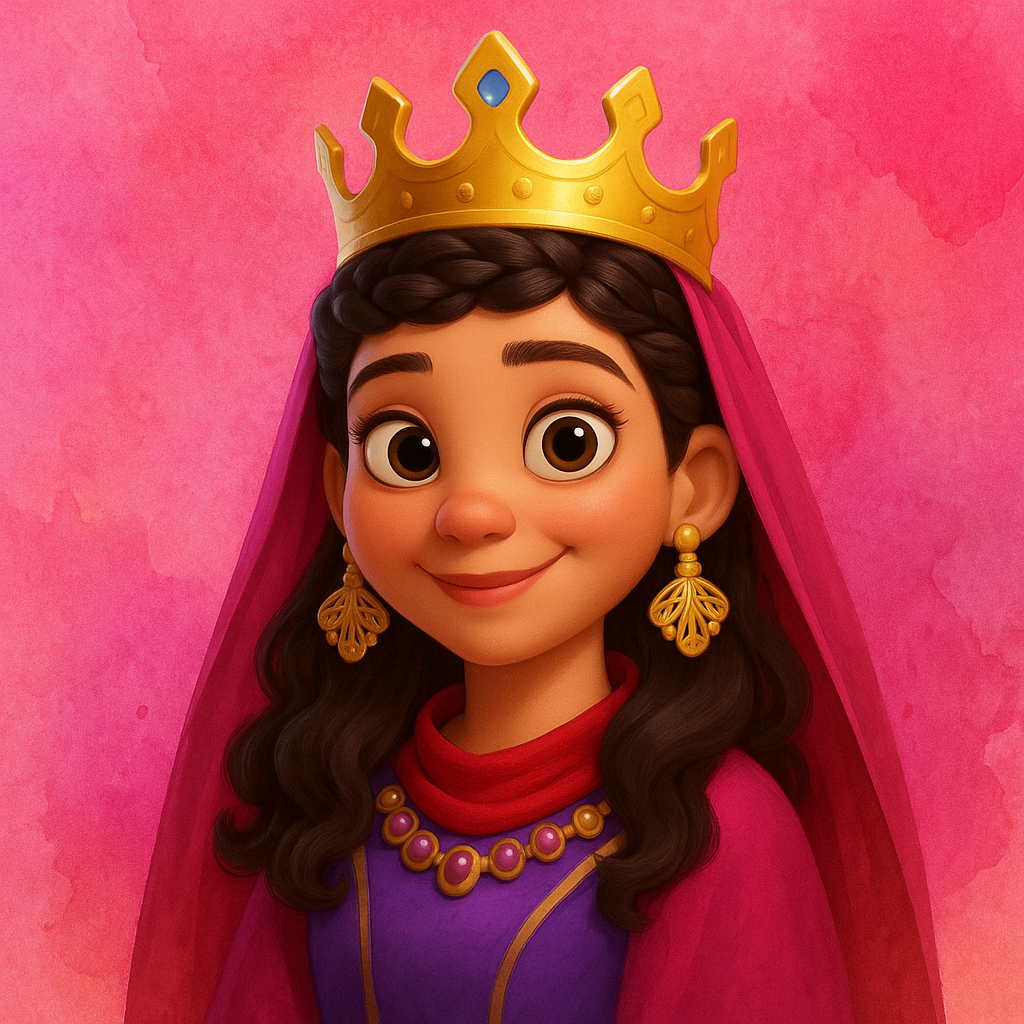
The messengers rode hard, their horses kicking up dust as they carried the king’s decree to every province of Persia. The new law, bearing the royal seal, traveled faster than the whispers of Haman’s treachery had.
“On the appointed day, the Jews may stand and defend themselves against any who would seek to harm them.”
For the first time since the dreadful decree had been issued, hope replaced fear in the hearts of my people.
The Shadows Lift
When the first decree had been sent, mourning had filled the streets. My people had torn their garments, covered themselves in sackcloth and ashes, and lifted their voices in desperate prayers.
Now, the sounds of sorrow were replaced with preparations for battle.
Jewish men trained in courtyards, sharpening swords and bows, readying themselves for the day that had once promised their destruction. Women gathered supplies, ensuring their families would be protected. Even children could sense the shift—this was no longer a people awaiting death.
This was a people ready to stand.
And Mordecai—now adorned in royal garments of blue and white—was at the forefront, guiding them with wisdom and faith.
The Persian officials, many of whom had once feared Haman’s influence, now saw Mordecai’s rise to power. His authority carried the weight of the king’s favor, and slowly, the tides began to turn.
Some non-Jews even aligned themselves with the Jews, recognizing the unseen force that protected them.
The day of reckoning was approaching. And this time, my people would not be powerless.
The Appointed Day Arrives
The fateful day arrived—the very day that had been marked for our annihilation. But instead of Jewish blood being spilled, it was our enemies who fell.
Across the empire, those who had once expected an easy slaughter found themselves facing a people prepared, strengthened, and unyielding.
In Susa alone, three hundred men who had lifted their hands against the Jews were struck down. Around 75,000 in other places throughout the province.
Even the ten sons of Haman, who had hoped to continue their father’s legacy of hatred, fell in battle.
Justice had found them.
But the Jewish people did not plunder the riches of those they defeated. This was not about vengeance or greed—it was about survival, about justice, about standing firm in the face of destruction.
The battle raged for two days, but by the time the sun set on the second day, a great victory had been secured.
Not a single Jewish life was lost in vain.
I received the news in the palace, my hands trembling as I read each report.
The people had prevailed.
Mordecai, standing beside me, let out a deep breath, his eyes lifting toward the heavens.
“Our God has not abandoned us,” he murmured.
No, He had not.
The King’s Favor
That evening, as the fires of celebration burned in the streets of Susa, I once again stood before Xerxes.
The battle had been won, but there was one last request I had to make.
“Grant us one more day, my king,” I said. “Let my people in Susa continue to defend themselves tomorrow as well, that no remnant of this evil remains.”
Xerxes, who had already seen the devastation caused by those who sought to harm the Jews, nodded without hesitation.
“It shall be done,” he said.
And so, on the following day, my people stood their ground once more, ensuring that no remaining threat would rise against them again.
By the time the final battle had ended, peace had been restored to the land.
The Birth of Purim
The following days were unlike anything my people had ever known.
What had once been a time of dread and mourning was now a time of celebration and joy.
Families feasted together, homes were filled with laughter, and children ran through the streets with songs of deliverance on their lips.
Mordecai and I knew that this victory must never be forgotten.
And so, we wrote a new decree—not one of war, but of remembrance.
“Each year, on these days, the Jewish people shall celebrate the festival of Purim, a time of joy and thanksgiving, so that generations to come will never forget how they were delivered from destruction.”
Gifts of food were exchanged, the poor were cared for, and the people rejoiced in the faithfulness of the God who had never abandoned them.
The people had been saved.
But more than that—they had been restored.
The Celebrations Continue
The celebrations did not happen all at once.
For the Jews in the outlying provinces, the battle had lasted only one day, and by the 14th of Adar, they had already begun to celebrate their victory with feasting and joy.
But in Susa, where my people had fought for two days, the celebrations did not begin until the 15th of Adar.
It was a strange thing—to hear reports of rejoicing in the countryside while the battle still raged within the capital. But we knew that by delaying our joy for just one more day, we were ensuring that every enemy had been silenced.
And so, when the sun finally set on the 15th, and the last of our oppressors had fallen, the city of Susa erupted into the greatest celebration of all.
The streets were filled with music, and the aroma of spices and fresh bread wafted through the air as families opened their doors to one another.
Mordecai and I knew that this distinction must be remembered.
That is why, when we wrote the decree establishing Purim, we ensured that the festival would always be celebrated in two ways:
- Throughout the kingdom, the Jews would celebrate Purim on the 14th of Adar, marking their day of deliverance.
- But in Susa, where the battle had lasted longer, the Jews would celebrate on the 15th, remembering the extended struggle that had finally secured peace.
And so, for generations to come, these two days would be forever set apart as days of joy, feasting, and thanksgiving.
A time to give gifts to one another, to care for the poor, and to never forget how, in the face of certain destruction, God had delivered us.
Esther’s Reflection
As I sat in my chambers that night, listening to the laughter echoing through the streets, I felt an overwhelming sense of peace.
It had all started with fear.
Fear of speaking.
Fear of the king.
Fear of the unknown.
But fear had not won.
Had I known, as that young girl being taken into the palace, what lay ahead for me?
Had I known, as I stood before Xerxes trembling, that my words would be enough to turn his heart?
Had I known, when I first heard Mordecai’s plea, that I would one day be remembered not just as a queen, but as a deliverer of my people?
No.
But God had known.
Mordecai’s words echoed in my heart:
“Who knows but that you have come to your royal position for such a time as this?”
The answer was clear now.
I had been placed here for this very purpose.
I was not just Esther, the queen of Persia.
I was Hadassah, the daughter of my people. The protector of my nation.
And I had done what I was meant to do.
As I turned my gaze toward the stars outside my window, I whispered my final prayer of the night.
“Thank You, Lord. For such a time as this.”